Choosing Your First Handgun
Your first handgun should be one you can shoot well, carry or store safely, and afford to practice with. That usually rules out the gun that looks best online and points toward something plain, reliable and easy to learn. This guide covers the choices in the order most new owners face them.
Start with the purpose
Be honest about what the gun is for. The main uses are:
- Home defense. Size and weight matter less. A full-size or compact pistol with a light rail is easier to shoot well under stress.
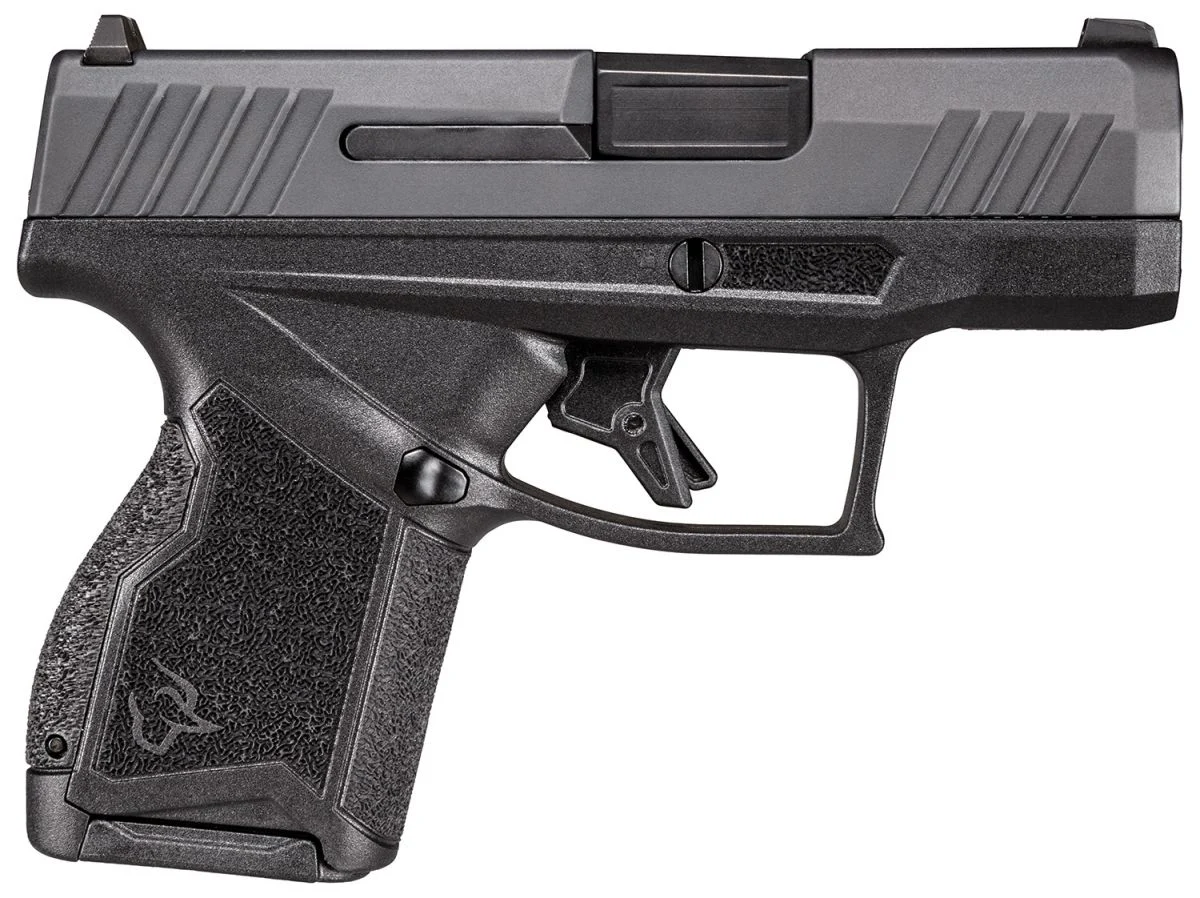
- Concealed carry. The gun has to be small and light enough that you actually carry it, which usually means a compact or subcompact pistol.
- Range and training. Low recoil and cheap ammunition help you practice more.
- Outdoors. Hikers and hunters may want a larger caliber or a revolver.
Many people end up choosing one compact 9mm pistol that does a fair job at all of these.
Pistol or revolver
Semi-automatic pistols hold more rounds, are flatter to carry and reload quickly with a magazine. Modern striker-fired pistols are simple to operate. Revolvers are simple to check and load, work well with a range of ammunition and have no magazine to lose, but they hold fewer rounds and small revolvers are hard to shoot well because of heavy triggers and sharp recoil. For most new shooters, a mid-size pistol is easier to learn.
Caliber
- 9mm Luger is the most common choice for good reason: moderate recoil, high capacity, wide availability and good defensive loads.
- .380 ACP allows very small pistols, but those small guns can be snappy and ammunition costs more.
- .22 LR is ideal for learning and cheap practice, though rimfire ammunition is less reliable for defense.
- .38 Special is the classic revolver cartridge.
- .40 S&W, 10mm and .45 ACP have more recoil and cost more to shoot. Fine choices once you have experience.
Size and fit
Hold as many guns as you can before you buy. A good fit means:
- You can reach the trigger with the pad of your finger while the web of your hand sits high on the grip.
- You can reach the magazine release and slide stop without shifting much.
- You can rack the slide. If you struggle, try a different model or technique before giving up on a pistol.
- The sights line up naturally when you raise the gun.
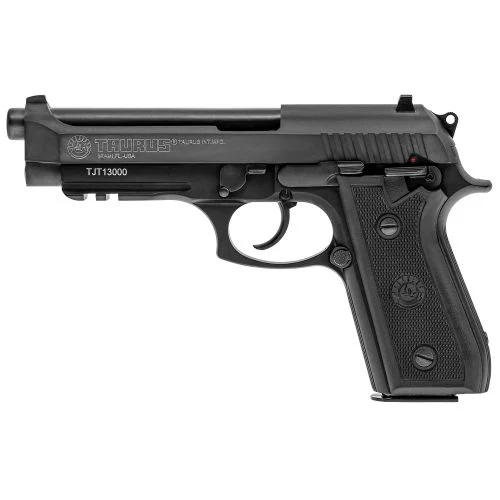
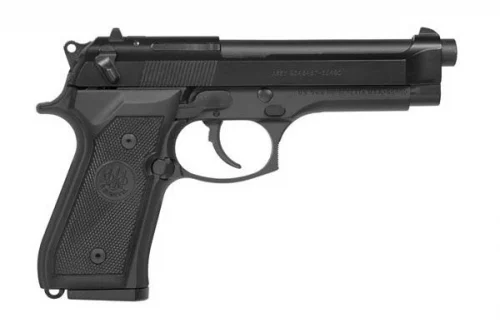
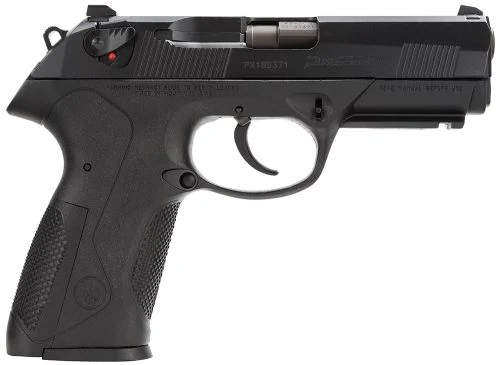
Bigger guns are easier to shoot. Smaller guns are easier to carry. A compact frame is often the best middle ground.
Sights and optics
Most pistols come with basic three-dot or plain sights. Night sights help in low light. Many new pistols are cut to accept a small red dot sight, which can make it easier to focus on the target, but it takes practice to find the dot quickly. If you think you might add one later, buy an optics-ready model now.
Safety features
All modern pistols from major makers include internal safeties that prevent firing if dropped. Some also have a manual thumb safety or a grip safety. Neither type is better for everyone; what matters is training with the gun you own until operating it is automatic. The most important safety is your trigger finger and a good holster that covers the trigger guard.
Buying it legally
Handguns ship to a licensed dealer, and federal law sets the minimum age at 21 for a dealer handgun sale. Some states add permits or certificates, waiting periods or purchase limits. Read how to buy a gun online and our FFL transfer guide before you order, and check your state on our city pages.
What else to buy
- Practice ammunition, plenty of it. Plan on several hundred rounds in your first months.
- Defensive ammunition from a major maker, tested in your gun for reliability.
- Extra magazines, at least two, where your state allows them.
- Eye and ear protection for every range trip.
- A holster made for your exact model if you plan to carry.
- A lockbox or safe to keep the gun away from children and unauthorized users.
- A cleaning kit and the owner's manual.
Budget
Plan the money for the whole setup, not just the gun. A quality pistol from a major maker, a good holster, a lockbox, extra magazines, defensive ammunition, practice ammunition, a class and range fees add up. It is better to buy a plain, reliable pistol and have money left for training than to spend everything on the gun and never practice. Well-known models also have more holsters, sights and parts available.
Rent before you buy
If a range near you rents handguns, try several before you decide. Shoot at least a box of ammunition through each so you get past first impressions. Pay attention to how easily you can load the magazine, rack the slide and reach the controls, and how well you shoot after the first twenty rounds.
Get training
A basic handgun class teaches safe handling, loading, clearing malfunctions and marksmanship. Many states require a class for a carry permit anyway. Public ranges run by state wildlife agencies, listed on our city pages, are a good place to practice. Dry-fire practice at home with an unloaded gun and no ammunition in the room builds trigger control for free.
The four basic rules
- Treat every gun as if it is loaded.
- Never point a gun at anything you are not willing to destroy.
- Keep your finger off the trigger until your sights are on the target.
- Be sure of your target and what is beyond it.
Next steps
If the gun is mainly for the house, read our home defense guide. If you plan to carry outside your state, read concealed carry reciprocity. Then browse the handguns in our shop.
General information, not legal advice. Current as of September 2026. Laws change; check the official source before you act.